
Attention New Parents|Identifying & Caring for Common Baby Rashes
by Taste For LifeZi JIn Tang 紫金堂澳洲 on Dec 08, 2021

Common Newborn Skin Conditions|A Complete Guide for Parents
Newborns have delicate and sensitive skin, which may sometimes show redness, rashes, or peeling. These changes often cause concern for new parents, but most are temporary and part of normal development. Learning to recognize common skin conditions helps reduce worry and ensures proper care.

These conditions are primarily related to the incomplete development of the stratum corneum and the insufficient function of the skin barrier. As a result, infant skin is more vulnerable to external irritants or bacterial exposure, leading to damage, allergic reactions, and heightened sensitivity.
In addition, newborns are experiencing their first contact with the external environment, which may cause temporary discomfort and trigger various skin issues. Because different conditions tend to occur at specific stages of growth, children may encounter diverse skin problems throughout their developmental journey.
Making It Easier for New Parents to Understand
6 Common Infant Skin Conditions:
1. Erythema Toxicum (Newborn Rash)


Erythema toxicum typically appears within the first few days after birth, affecting the face, trunk, or limbs. The rash presents as red patches measuring 1–3 cm, sometimes with a white center or firm pustule‑like texture.
This condition occurs in approximately 50–75% of newborns, making it one of the most common infant skin issues.
The exact cause remains unclear, but the rash is not itchy and usually resolves spontaneously within one to two weeks without treatment.
Differential diagnosis is important to distinguish erythema toxicum from infectious diseases. If accompanied by poor appetite, reduced activity, or other systemic symptoms, medical evaluation is recommended.
2. Milia (Milk Spots)


Soon after birth, many infants develop small white or pale yellow bumps on the nose or cheeks, resembling tiny pimples. This condition, known as milia , occurs because the sebaceous glands are not yet fully developed. As a result, natural secretions cannot be released to the skin surface and instead accumulate beneath, forming these small keratin‑filled cysts.
Milia are harmless and typically disappear on their own within a few weeks as the skin matures. Manual squeezing or applying topical remedies should be avoided, as these may cause irritation or scarring.
3. Neonatal Acne (Baby Acne)


Often called 「Baby acne」most often appears on the cheeks and nose, resembling adolescent acne with red papules, white pustules, and comedones. It usually develops at birth or within the first 2–3 weeks of life. The primary cause is maternal androgens entering the infant’s bloodstream, which stimulate the sebaceous glands and lead to increased oil production. This condition is harmless, does not cause discomfort, and typically resolves naturally within several weeks. No medical treatment is required. Gentle cleansing with lukewarm water is sufficient, while squeezing or applying heavy creams should be avoided to prevent irritation or scarring.
Care Considerations for Baby Acne:
-
Avoid Squeezing or Scratching: Manual pressure may increase the risk of infection and scarring. If necessary, soft mittens can be used to prevent accidental scratching.
-
Gentle Cleansing: Wash the face with clean water and mild baby‑friendly cleansers. Keep the skin dry and clean. Avoid applying baby oil or steroid‑based ointments, which may worsen acne.
-
No Folk Remedies: Refrain from using unverified topical treatments. Baby acne typically resolves naturally over time without leaving scars, so parents can be reassured.
-
Seek Medical Advice if Needed: If acne persists and is accompanied by signs of precocious puberty or virilization, consultation with a pediatric endocrinologist is recommended.
4. Heat Rash (Prickly Heat, Sweat Rash)


Heat rash, also known as prickly heat or sweat rash,
commonly occurs in infants when environmental temperatures are too high or when the nervous system’s ability to regulate heat is still immature. Because the skin barrier is underdeveloped, sweat ducts may become blocked, leading to raised bumps on the skin.
The rash typically appears on the back, in skin folds, or areas that sweat easily and remain covered. Overdressing is a frequent cause, so maintaining a comfortable room temperature and avoiding excessive clothing are important preventive measures.
In some cases, lotions may block sweat glands and trigger heat rash. If suspected, switching to a lighter, non‑comedogenic moisturizer may help.
Treatment is usually unnecessary. The rash often disappears once the baby is kept cool and dry. Medication is only needed if pustules form or if itching occurs.
5. Atopic Dermatitis (Eczema)


Atopic dermatitis, or eczema, is one of the most common skin problems in infants aged 0–2 years.
The primary cause is a congenital deficiency of natural moisturizing factors in the stratum corneum, which weakens the skin barrier. As a result, allergens and irritants can easily penetrate, leading to allergic reactions and inflammation.
During infancy, rashes often appear on the face and the outer surfaces of the arms and legs. As children grow older, the distribution shifts to flexural areas such as the elbows and behind the knees.
Care Considerations for Atopic Dermatitis (Eczema):
-
Moisturizing is Key: Focus on hydration to maintain skin stability. Apply lotion or cream immediately after bathing while the skin is still slightly damp to lock in moisture. Choose natural or simple formulations whenever possible.
-
Gentle Cleansing: Keep bath water below 40 °C and use mild, weakly acidic cleansers. When purchasing products, follow the three principles: fragrance‑free, preservative‑free, and colorant‑free. In summer, wipe away sweat promptly to prevent irritation.
-
Treatment: Babies with eczema often scratch due to itching. Steroid ointments prescribed by a physician can help reduce inflammation and itching. Do not discontinue medication on your own once symptoms improve—always follow medical advice.
-
Select loose, breathable, cotton fabrics that absorb sweat and minimize friction. Soft, moisture‑wicking materials help keep the skin comfortable.
6. Roseola Infantum (Baby Roseola, Exanthem Subitum)
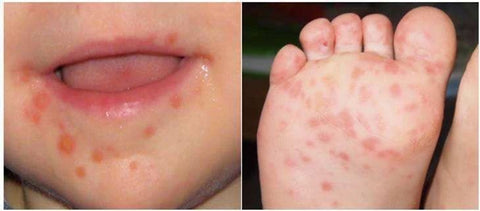
It is caused by infection with Human Herpesvirus Type 6 or 7 (HHV‑6/HHV‑7). It most commonly affects infants between 6 months and 2 years of age. Once infected, lifelong immunity usually develops, though rare cases of reinfection may occur.
The hallmark of roseola is a sudden high fever, often reaching 40 °C, that lasts for 3–5 days. During this period, infants may occasionally show signs of poor appetite or irritability. Unlike other viral infections, roseola typically does not present with runny nose, cough, or conjunctivitis.
In some cases, swelling may appear around the eyes, and lymph nodes behind the ears or at the back of the head can become enlarged. After the high fever subsides, a rose‑colored, pink rash emerges, most prominently on the trunk. The rash may occasionally spread to the neck and limbs. The rash typically fades gradually within 1–3 days, sometimes merging before disappearing completely.
Roseola infantum is generally a benign illness and rarely leads to complications or long‑term effects. In most cases, children recover fully without any sequelae. However, in about 3–4% of cases, the high fever may trigger febrile seizures. These are temporary neurological events caused by the sudden rise in body temperature. While alarming to parents, febrile seizures are usually short‑lived and do not cause permanent damage.
During a febrile seizure, parents should remain calm and avoid panicking. It is important to check the child’s temperature and carry out appropriate fever‑reducing measures, while also observing and recording the duration of the seizure. Ensure that the baby’s mouth and nose remain clear to allow smooth breathing. Do not place any objects in the baby’s mouth, and do not restrain or tie down the limbs during convulsions. Such actions may increase the risk of injury rather than provide relief.
If a baby’s febrile seizure lasts for a prolonged period or occurs repeatedly, immediate medical attention should be sought.

Baby Skincare
1. Proper Cleansing
Infant skin is delicate and fragile, so it is important to avoid using harsh cleansing products. Gentle baby soaps, body washes, or bubble bath solutions are generally suitable, but if the baby’s skin condition is sensitive, plain water alone can be a safe option for cleansing.
2. Keeping Baby’s Skin Hydrated
Moisturizing is equally essential. Since every baby’s skin physiology is different, hydration needs vary depending on individual skin type, environment, and seasonal temperature or humidity. Applying lotions or creams helps replenish the protective oil layer and prevents moisture loss, thereby maintaining the skin’s natural barrier function.
3. Maintaining the Right Temperature and Humidity
Babies have immature sweat and heat regulation systems, combined with active metabolism that produces excess heat and perspiration. Clothing should therefore be lightweight, breathable, and sweat‑absorbent.
Avoid wrapping the baby too tightly, as this can cause discomfort or even lead to red rashes across the body. Bath water should be kept between 37–40 °C, neither too cold nor too hot, to protect the baby’s tender skin.
Avoid Using Folk Remedies
Seeking professional medical advice early is the safest approach, as reliance on folk remedies or inappropriate treatments may result in serious consequences.


